UNCLE SAM’S: 1972 - 1980
Click Here for a History of Uncle Sam's
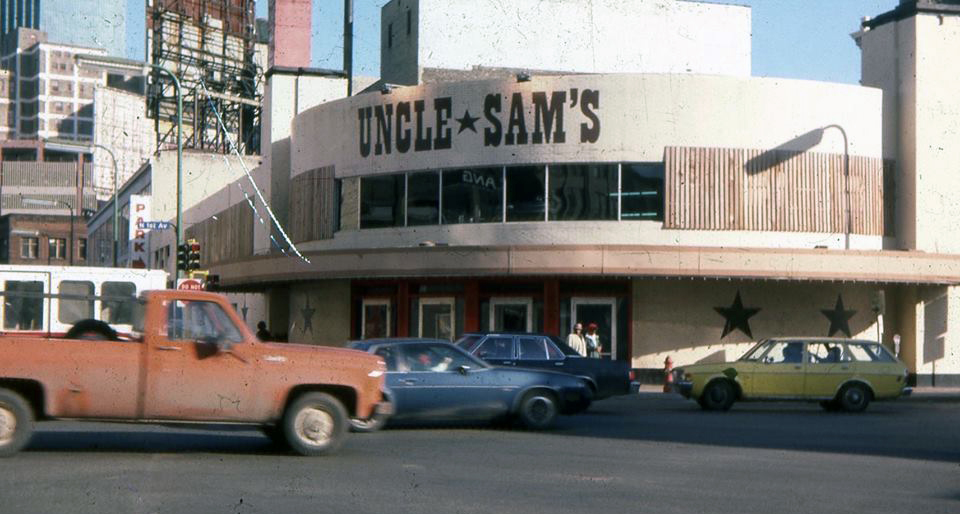
1972-1980Finally the Committee found a solution to its financial and management problems. On April 7, 1972, the Committee and a company out of Cincinnati called American Scene signed a document called an Entertainment Franchise Agreement (EFA), which provided for American Scene to take over the management of the club and turn it into a link in their Uncle Sam’s chain of discos.
 I have not found a copy of the EFA, but here’s what we do know:
- American Scene virtually “took over” the business, paying the rent, employees, providing an on-site manager, making entertainment decisions, etc. (SM)
- Contrary to several reports, Allan did NOT sell his shares in the Committee to American Scene. (BF, AF)
- The liquor license continued to be in the name of The Committee. (MLD)
- The business continued to be owned by The Committee.
American Scene made the place over into a “Saturday Night Fever” type disco (although the film wouldn’t be released until 1977), with a lighted dance floor, screens and projectors, and all the accoutrements that made it just like its other Uncle Sam’s locations.
[American Scene] had a notion that they could build a chain of dance clubs around the country in much the same way that Ray Kroc had built McDonald’s: by treating all markets alike and standardizing everything, including the name. (CRM)
*** PLEASE NOTE *** Performances listed below are for acts in the Mainroom only (once 7th Street Entry opened). In some cases I couldn’t tell, and included them just in case. Also, although this website generally ends at 1974 and I don’t do local bands, I’ve broken both rules here by including acts (local and national) for this list through the Uncle Sam’s/Sam’s era.
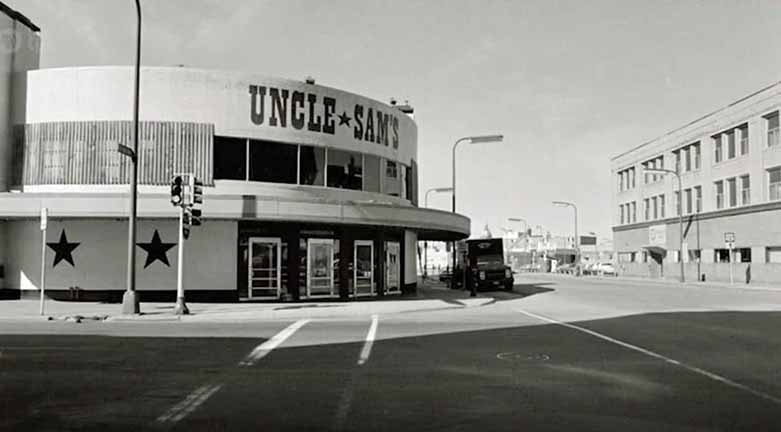
Image found on Facebook – unknown source
1972 An invitation-only Pre-Opening Party was held on Thursday, July 6, 1972. Entertainment columnist Pat Lindquist of the Skyway News had this to say about that:
SEEN BUT NOT HEARD AT UNCLE SAM’S . . . Uncle Sam’s had a little bash on the Thursday before their grand opening to let a few peeps glimpse the greatness of what was to come.
Well, all I can say is it was a colorful as could be, including bubbles from Heaven a la Lawrence Welk), as crowded as could be, and louder than should be. The speaker system for their duo turntables was fantastastic and the two live drummers made it spectacular.
The trouble was their rapid pace gave us barely one second of silence between songs. Now, that’s hardly time to say hello to your date. Fortunately, I knew my date but if you were trying to say hello told friends or meet anyone new . . . forget it! (Unless you’re very good at reading lips.) Granted, people dislike those old 20 minute intermissions every hour but, what about 5 or 6 minutes an hour???
Since there are no “quiet” corners in Uncle Sam’s, let’s hope they’ll put a little quiet between some songs. (Skyway News, July 19, 1972)
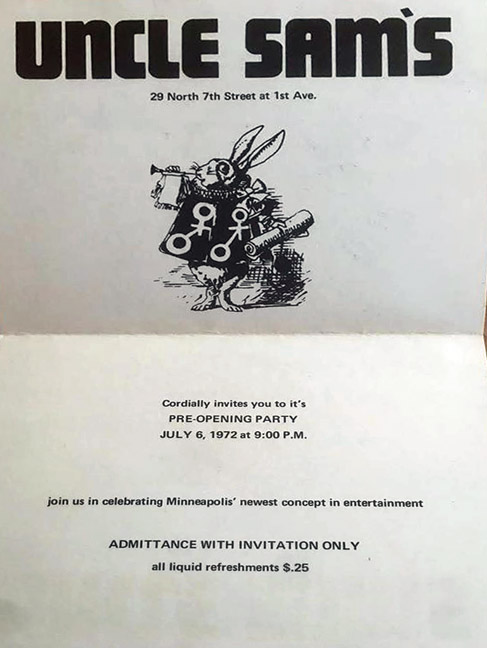
Courtesy Steve McClellan The club was initially described as a discotheque, and the music was “computerized Top 40.” The new venue “eventually may offer live entertainment similar to the music groups booked by the old Depot.” (Minneapolis Tribune, July 8, 1972) In an article from the July 12, 1972 issue of the Skyway News, Pat Lindquist reported that Uncled Sam’s opened “last week.” She described the outside as painted red, white, and blue. The inside had new red carpeting; red, white, and blue bar lights; and a super shocking dance floor, complete with colored lights under plexiglass flooring. Featured were old time movies and slides; flashing floor and wall lights; and a game room. Hours were 8 pm until 1 pm to start. Doug Maynard’s band may have been the first to entertain at Uncle Sam’s. Columnist Irv Letofsky reported that Uncle Sam’s was an instant hit, with over 1,000 paying patrons a night on its first Friday and Saturday (despite the fact that it seated 650). There was originally a dress code of no blue jeans and no hats, “to keep out undesirables.” They relented to “proper attire … But still no hats, because other people grab them and cause trouble.” (Minneapolis Tribune, July 16, 1972) The no hat rule was interpreted to be a mechanism to keep out blacks, as was the “no canes” rule instituted from Cincinnati at one point. (CR) On August 9, 1972, two young men from Menomonie were convicted of assault and breach of the peace after getting into a fight with four off-duty policemen working as bouncers at the club. Despite the fact that at least one of the young men required hospitalization from a beating from the police, they were each fined $100 and told that they were “old enough to know they are expected to walk away from provocation and not take up a fight every time it’s offered.” (Minneapolis Star, August 10, 1972) By October 1972, Irv Letofsky was reporting that the club was drawing 5,000 people per week since it opened, well above break-even. (Minneapolis Tribune, October 2, 1972) Pat Lyons may have been the first General Manager of the Club. In 1976 he was scheduled to leave to manage the new club in Boston.
UNCLE SAM’S RECORDS In the fall of 1972, Danny’s Reasons recorded a single that was issued on Uncle Sam’s Records. The song was the 1960 Ricky Nelson chestnut “Young Emotions” (one of my favorite songs…) arranged by Dick Wiegand and produced by Timothy D. Kehr. In a column/ad called Christian Cuts, put out by the Christian School of Hair Design, and published in the Minneapolis Tribune on February 4, 1973, the record was described as a hit record, and was Number 15. It did not say what chart, but this was clarified in a profile of Danny in the Minneapolis Tribune on March 4, 1973, as various radio charts in the Upper Midwest; it also did well in Duluth. The flip side was “Hard Old Times,” and the record was Uncle Sam’s No. 19361.
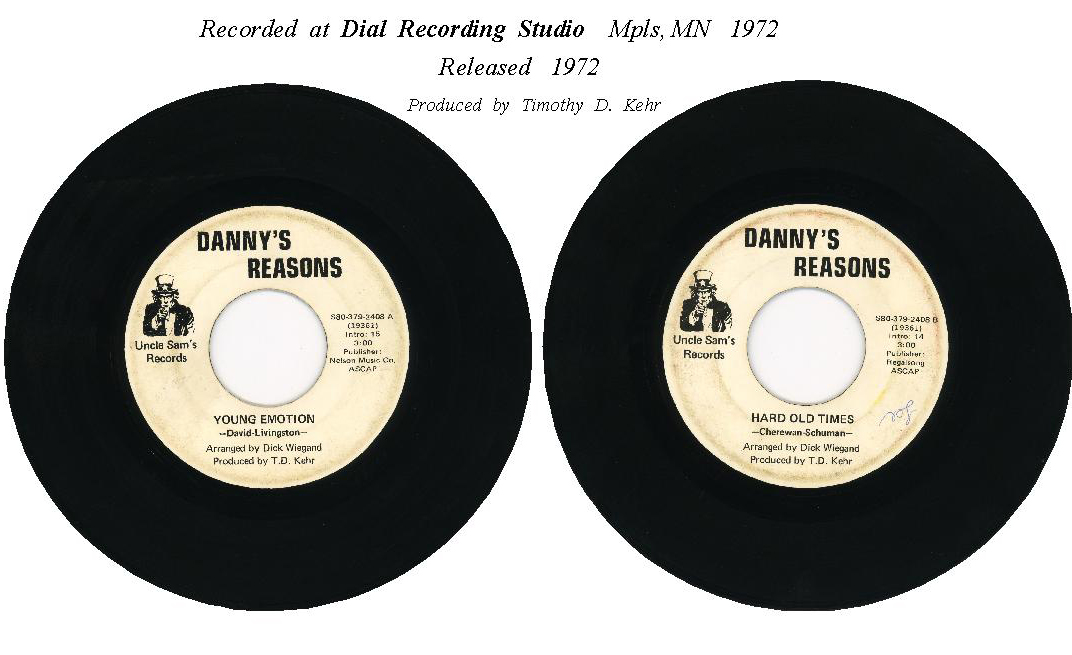
Image courtesy minniepaulmusic.com
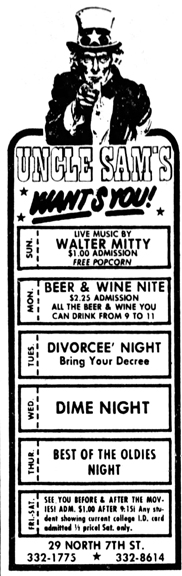
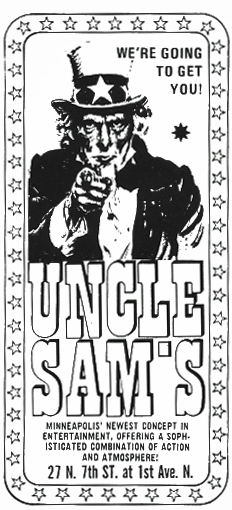
The early ad below shows our Uncle Sam as a little bit more sinister than we’re used to seeing him. This was from 1972 or ’73, probably before the drinking age was dropped from 21 to 18.
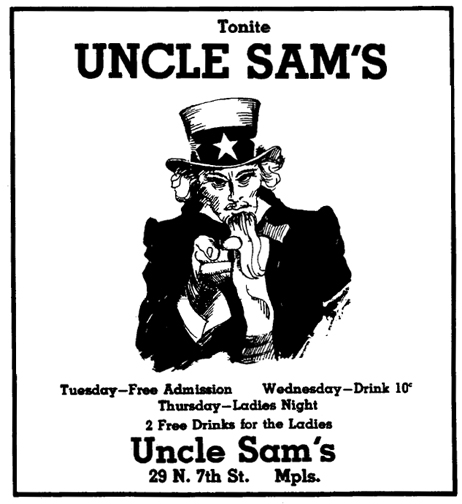
Minnesota Daily ad courtesy Robb Henry
1973 At first the club just played records, spun by a DJ. From 1973 to 1978, the main DJ was Steve Egsgaard, a former DJ at KQRS. (30th)
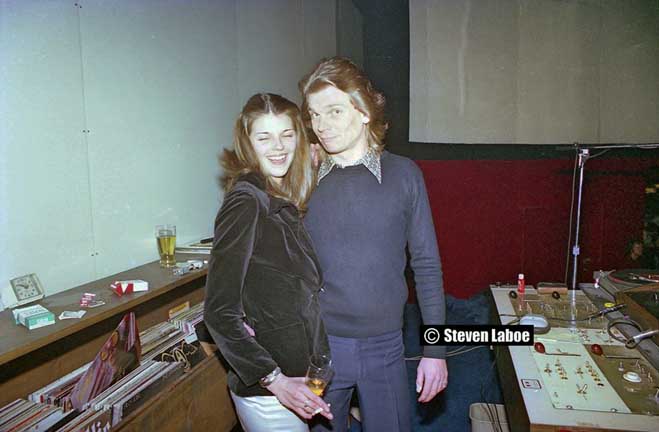
Steve Egesgard and friend in the DJ booth. Photo copyright Steven Laboe
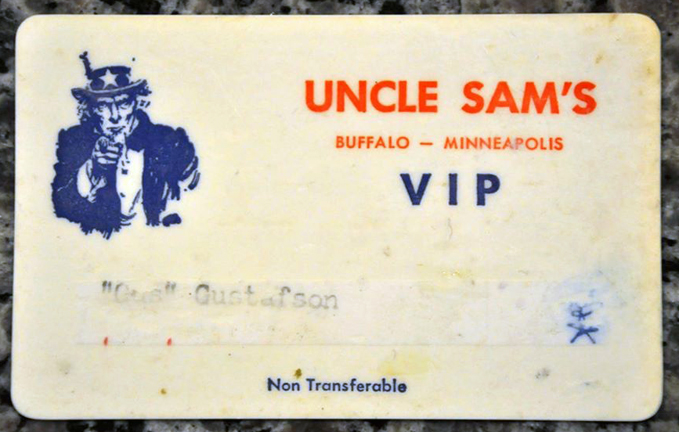
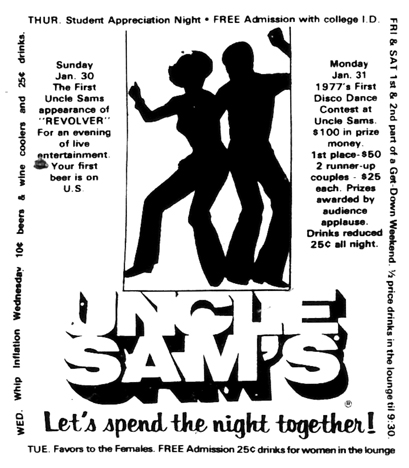
Steve Gustafson’s VIP Pass By 1973 the club had started booking live bands. Sundays were often live music nights, mostly booked by Marsh Productions.
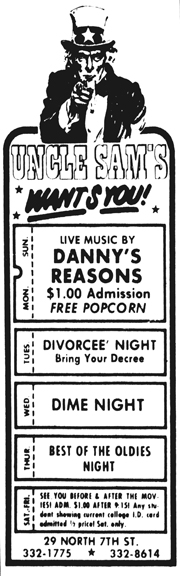
Minneapolis Tribune, February 4, 1973
Shows at Uncle Sam's
February 11, 1973
Walter Mitty, Featuring the Brilliant Robb Henry on Guitar.
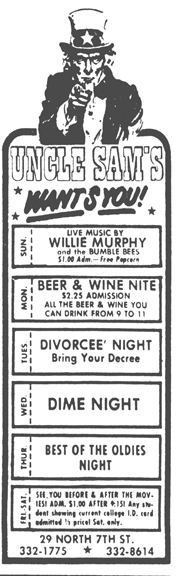
March 11, 1973
Colla (formerly Crow)
Here’s a Big One:: Colla was a band made up of former members of Crow, plus the mighty Gregg Inhofer from Pepper Fog.
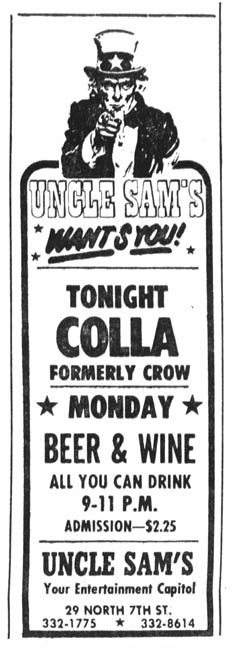
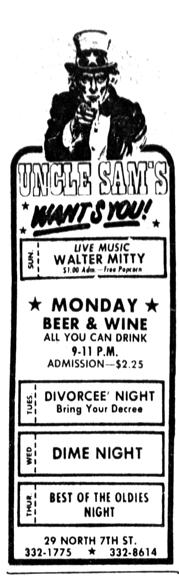
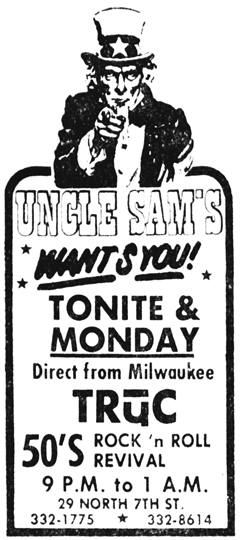
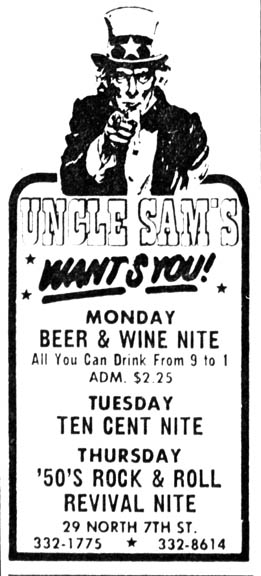
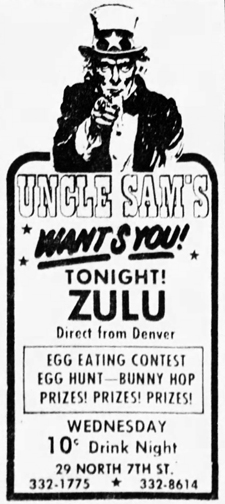
May 7, 1973
Zulu
May 28, 1973: Zulu
Attendance was given a boost on June 1, 1973, when the drinking age in Minnesota was lowered from 21 to 18. The Tribune reported that at midnight on June 1, about 75 new drinkers appeared at the door at Uncle Sam’s, IDs in hand. (Minneapolis Tribune, June 2, 1973)
On July 3, 1973, an 18-year-old male was stabbed in the abdomen by a 22-year-old male as he was leaving the club after a dust-up over a girl. (Minneapolis Star, July 3, 1973)
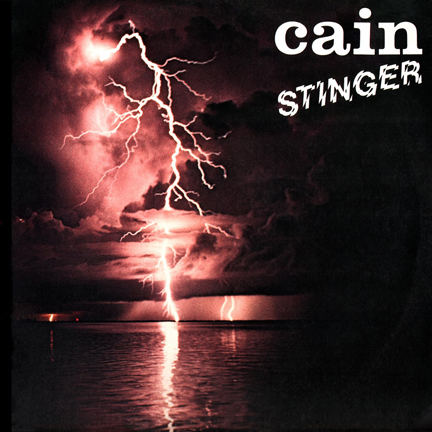
August 13, 1973: Cain
September 2-3, 1973: Sterling
September 9 – 10, 1973: Jesse Brady
November 5, 1973: Sterling
November 11, 1973: Sinaloa
December 3, 1973: Volcano
December 10, 1973: Sinaloa
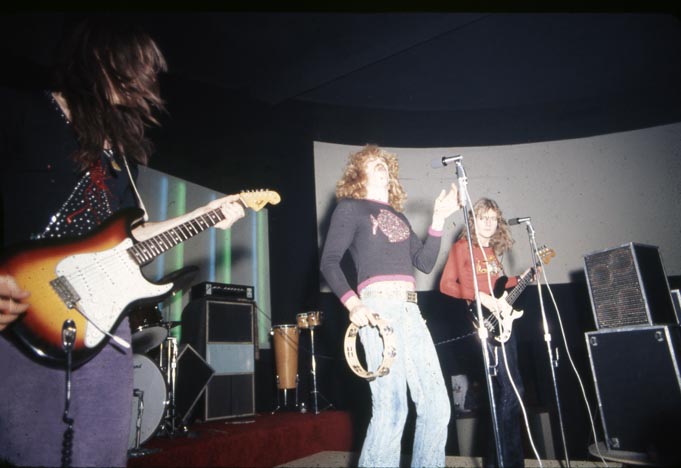
December 14, 1973
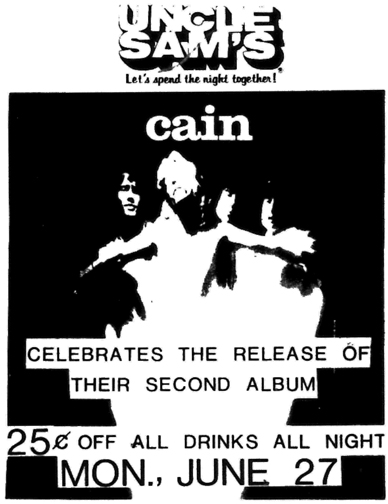
Cain
This is the first mention I have found of many appearances that Cain made to Uncle Sam’s stage.
Cain was led by consummate showman Jiggs Lee.
February 7, 1974
Live Shows in February 1974
January, 1974: A calendar of sorts printed in the Skyway News indicates that live bands only played on Fridays and Saturdays.
February 7 & 8: Cain
February 9, 1974: Straight Up. The January/February Insider reported that “lead singer Mark Gallagher is back (are hot pants still in?) The show includes fire, smoke and outlandish costumes (Ex-Litter turns glitter)…” Straight Up’s act required a lot of space, so they mostly performed in outstate ballrooms. In addition to Gallagher, ex-Litter drummer Tom Murray was in this crazy group. See a Dave Moore special report on Straight Up Here.
February 14: Open Rode

February 15-16: Jesse Brady
February 22-23: Everett James Band
Tuesdays: Oldies Night with Rudy’s Rock ‘n’ Roll Review
November 15, 1974
November & December 1974
November 18, 1974: Prodigy
November 19-22, 1974: Cain
December 7, 1974: Prodigy
December 16-21, 1974: Sterling
December 22, 1974: Cain
December 30-31, 1974: Sterling
March 31, 1975
Jesse Brady
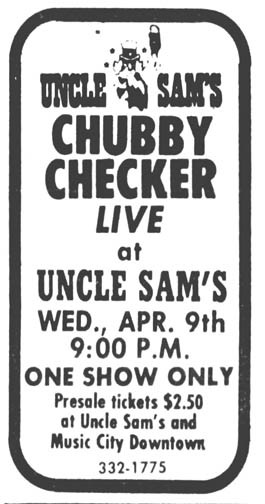
April 9, 1975: Chubby Checker. Why didn’t I go to this show? I was a fifties freak in the seventies!
Dix Steele remembered:
I worked there this night. It was unusual as we didn’t regularly do live music in those days. What I do remember was that Chubby Checker did two shows that night. Both for the same audience… It was a bit confusing to people…
October 13, 1975
Octoberfest
The poster below flummoxes me. It has no year, but has been tentatively identified as from 1975. As you can see, the dates are listed as the week of October 13 – 18, which entails six days. However, the days listed are Sunday through Saturday, which count out to be seven days. If you look at the 1974 calendar, the 13th through the 19th travel right through a week from Sunday to Saturday, so it makes more sense that this is in 1974. The lineup would probably have been:
October 13, 1974: Cain
October 14, 1974: Straight Up
October 15, 1974: Case
October 16, 1974: Sterling
October 17, 1974: Teen King
October 18, 1974: Pulse

July 10, 1976
Brian Auger
On July 20, 1976, Uncle Sam’s hosted Brian Auger and the Oblivion Express. Skip Jones’s review described the scene as “half price drinks, thick smoke, and loud, loud music.”
At 11:00 Auger appeared and the crowd ate up the British organ and keyboard God’s performance. Jones ended his review with “Hats off to Uncle Sam’s for some good live music and let’s all hope for more of the same.”
In the review, much was made of the difficulty Jones had in locating manager Steve McClellan in the huge building. McClellan was quoted as saying he had only been manager there for six months.
Local heroes Jesse Brady opened the show. Jesse Brady was moving into something called “sophistarock,” or maybe “half-baked,” although it made no difference to the girls in front.
+(Review: Insider, August 1976)
September 1, 1976
Drinking Age in Minnesota Raised From 18 to 19
On September 1, 1976, the drinking age in Minnesota was raised from 18 to 19, with previously enfranchised 18-year-olds grandfathered in.
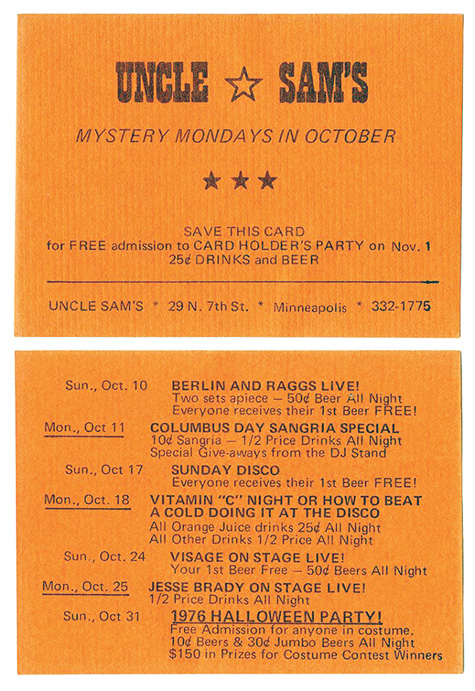
Mystery Mondays:
October 10, 1976: Berlin and Raggs54
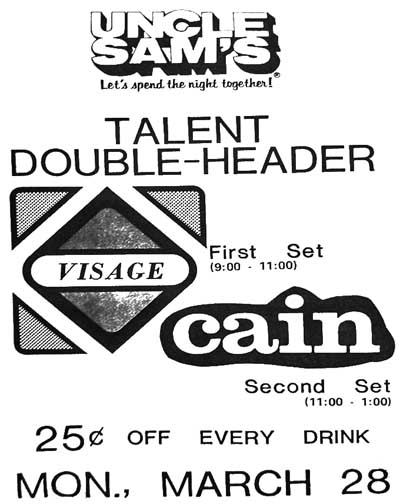
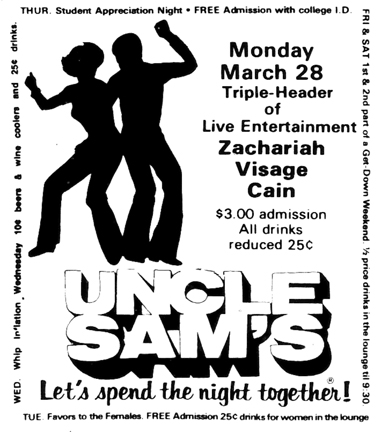
October 24, 1976: Visage
October 25, 1976: Jesse Brady
October 13, 1976
Jon Bream: ‘Discos: Dancing Madness’
One good hint of when disco came to Uncle Sam’s Is Jon Bream’s article, “Discos: ‘Dancing Madness’ – It Goes Bump in the Nightlife,” Published in Two Parts in the Minneapolis Star on October 13, 1976.
On October 13, 1976, Bream wrote an analysis and history of the music. He wrote that the phenomenon started on the east coast two years earlier, had finally made it to the Twin Cities, and that over a dozen full-time discos were prospering locally. He traced the first disco music to the summer of 1974.
CR also cites 1974 as the advent of the “first big wave of disco hits,” with songs such as:
- “Kung Fu Fighting” by Carl Douglas
- “Don’t Rock the Boat” by the Hues Corporation
- “Waterloo,” by ABBA
- “Rock Your Baby” by George McCrae
- “Never Can Say Goodbye,” by Gloria Gaynor
On October 14, 1976, Bream profiled 11 full-time local discos, including Uncle Sam’s:
Admission: $1
Drinks: About $1
Uncle Sam’s is a sensory experience. Patrons are blitzed by thunderous music, slide shows, films, a revolving, mirrored ball, a panoply of blinking lights, colored lights shining underneath an elevated, translucent dance floor and a drummer who plays along with the music.
Uncle Sam’s downtown’s biggest bar, is easily the largest disco in town. It’s where the action is for the white, under-25, blue-jean crowd. The huge place, which is a converted bus depot, is usually packed on weekends. People come to dance, play in the game-room (Foosball, pinball and pool are available), drink or talk in the plexiglass-enclosed, almost soundproof balcony.
Uncle Sam’s musical selection seems more dance-oriented than disco-chart oriented. Included are top 40 disco hits by such performers as K.C. and the Sunshine Band and Silver Convention as well as rock classics by the likes of Led Zeppelin and Aerosmith.
November 23, 1976
Brian Auger and Oblivion Express Repeat Performance
Brian Auger and Oblivion Express made a repeat performance, opened by Lamont Cranston.
A review by Harvey Ginsberg (December 3, 1976) complained that Lamont Cranston’s opening set was “overextended” and that Auger was delayed by an hour due to sound difficulties: “both the beer and music were becoming flat and the pack’em-to-the rafters policy of the club was causing more aggravation than excitement.”
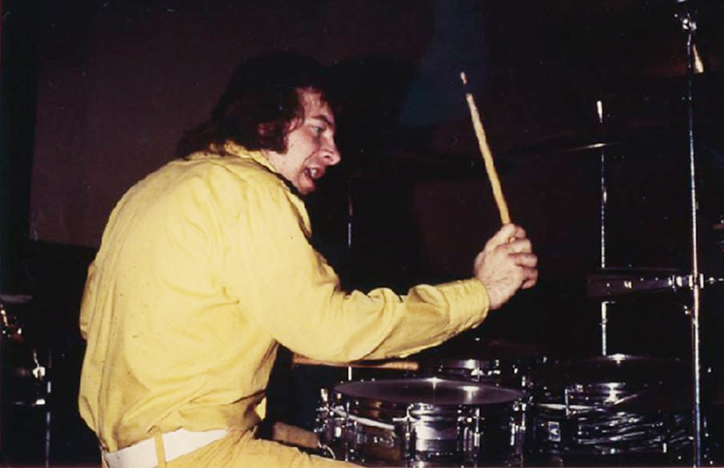
But when things were straightened out, the band gave out with a 90-minute set starting with “Brain Damage,” that those kids are probably feeling today. Or at least eardrum damage. The band included Jack Mills on guitar, Clive Sharmer on bass, Auger on Hammond organ and electric piano, Mike Clark on drums, and Lenox Langton on congas, with Alex Ligertwood on vocals.
November 25, 1976
Cain
In November 1976, Minneapolis police were allowed to moonlight as bouncers at clubs but not at the Flame, Moby Dick’s, or Uncle Sam’s. “They cater to kind of a wild crowd,” the Deputy Police Chief was quoted as saying. (Minneapolis Star, November 29, 1976).
December 5, 1976
Hamilton, Joe Frank, and Dennison
The Dangers of Naming Your Band After Its Members Is Demonstrated Here – What Happened to Reynolds? Wikipedia: “the Group First Hit the Charts in 1971 With ‘Don’t Pull Your Love.’ Reynolds Left the Group in Late 1972, and Was Replaced by Keyboardist Alan Dennison, but the Band Kept the Name ‘Hamilton, Joe Frank & Reynolds’ Until 1976. This Revised Line-up Performed the Group’s Biggest Hit, 1975’s ‘Fallin’ in Love.’ the Headliners Played Two 45-minute Sets, Reported the Insider. the Show Was Opened by Stone Ground.
December 26, 1976
W.H.I.M. Winter Warmer, Music by Raggs, Wolf Brothers, Spontaneous Combustion
W.H.I.M. Was a Telephone Service Where You Could Call and Find Something to Do.
July 25, 1977
Tornader
Tornader was apparently a group from spain that specialized in “jazz-funk, soul, disco” on their 1977 lp “hit it again,” according to discogs. Laura fissinger of the insider reviewed the show and was deeply disappointed in tornader, although apparently not as much as in opener vissage, which she called “local purveyors of metal ineptitude.” ouch.
August 26, 1977
Uncle Sam’s Promotes Its Theme
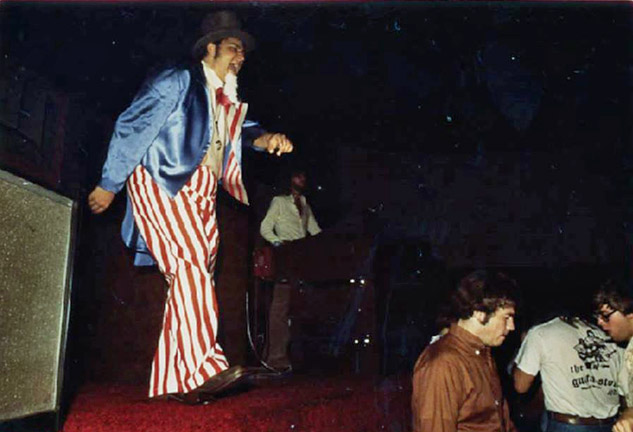
Uncle Sam’s went all out to promote its theme. Corporate in Ohio even sent an Uncle Sam’s costume, which was usually worn by Stan Himes. Here’s Stan in 1977:
November 30, 1977
Judd, from Mankato
Laura Fissinger’s review had a fair amount of criticism of the band and its current LP, but high praise for lead singer Steve McLoone, “who looks more like a state U fraternity boy than the laudable pop singer he is.” Both his stage presence and vocal delivery had “sparkly exuberance,” she noted, and she said that “If this guy doesn’t get a chance to croon over America’s car radios it will really be a shame. His is the perfect pop-rock voice.” (Insider, January/February 1978)
December 16, 1977
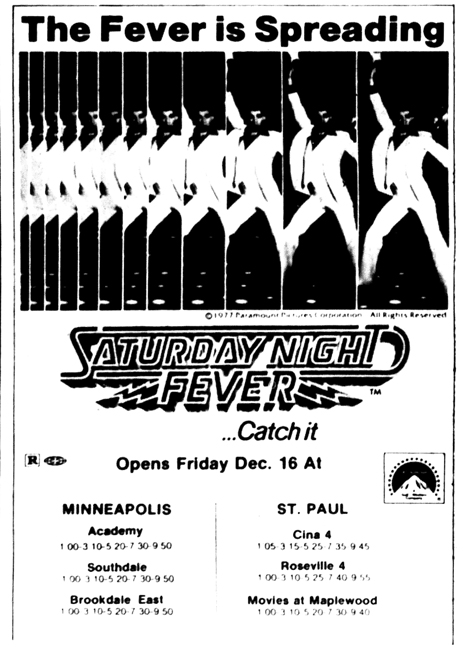
Saturday Night Fever
Disco got a kick in the hot pants with the release of the film “Saturday Night Fever” on December 16, 1977. The movie was originally shown in just a few theaters as shown in the ad below.
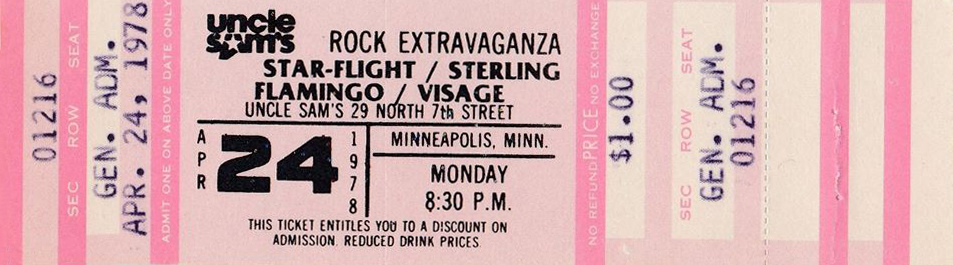
April 24, 1978
Rock Extravaganza
Thanks to Johnny Rey, who posted this ticket that tells us of this fabulous event starring four ** count ’em ** four bands! For $1!!
- Star-Flight
- Sterling
- Flamingo (Johnny’s band)
- Visage

October 15, 1978
Mind and Matter
A group called Mind and Matter performed at Uncle Sam’s in about October 1978. Members of the group include Turhan Bey (not the movie star from the ’40s) and Ira “Smitty” Smith. A 19-year-old Jimmy Jam was in the band. The performance was taped and shown on the first episode of a KSTP program called “Steamroller,” hosted by Marc Goldstein and Molly Lynch. The episode was aired on December 22, 1978, and can be seen Here. Thank you to show producer Ossian Or for the information on the show! I found a few other performances of Mind and Matter ranging from 1976 to 1979.
October 30, 1978
Jesse Brady
Jesse Brady
Steve McClellan remembered booking Nick Glider and Starbuck in 1978, but nothing came up in the Strib database. (Matos)
Things were apparently getting weird; in an article about Hennepin ave., Uncle Sam’s was described as “the kind of place where you might have thought the girl in the giant bunny ears was strange until you realized that she was dancing with a guy in a diaper.” it was Halloween, after all! (Minneapolis Star, October 30, 1978)
March 17, 1979
DJ Kevin Cole Replaced by Roy Freedom
On March 17, 1979, DJ Kevin Cole refused to beat a tambourine and blow a whistle while he spun records, so he was fired. He was replaced by Roy Freedom (nee Freid), from the Rickshaw room at Howard Wong’s on 494. Freedom immediately hired Cole as his backup. (30th)
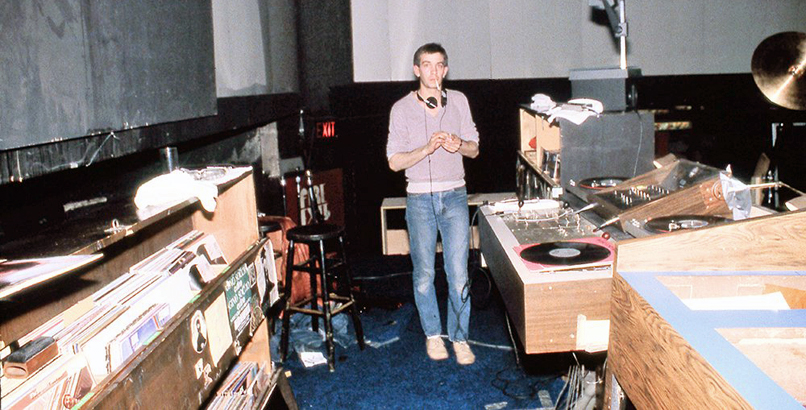
These were the days when the DJ booth was front and center on the stage.
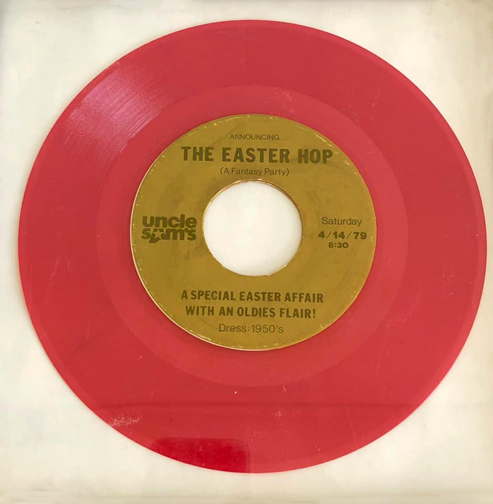
April 14, 1979
The Easter Hop
The Easter Hop Was a Big Enough Affair to Merit These Cool Invitations!
June 13, 1979
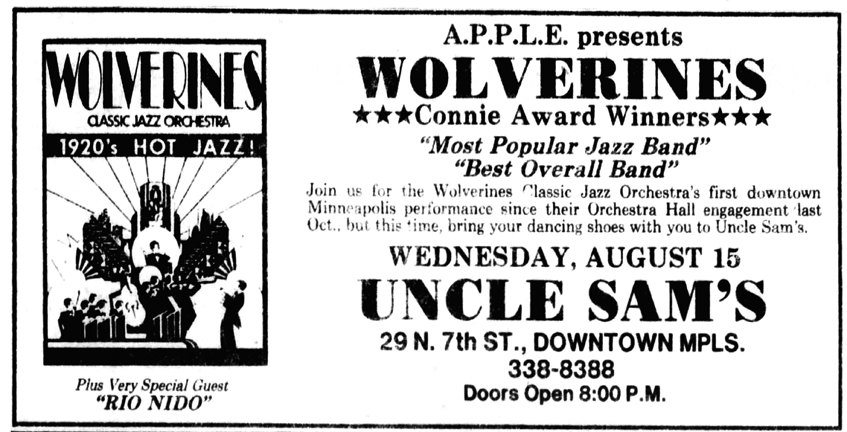
Wednesday Night Live
To further the “Disco Sucks” Movement, It was announced that Wednesdays would be set aside for live bands. Those listed in the ad below were:
June 13, 1979: Flamingo, Hypstrz, and Fingerprints
June 20, 1979: Judd, Chameleon, Dare Force
June 27: Willie & the Bees, Shangoya, and the Radio Rangers
Other promised bands included Daisy Dillman, the Wolverines, Rio Nido, Lamont Cranston, and Brainiac.

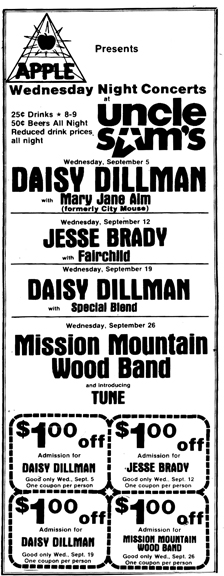
September 5, 1979
Daisy Dillman With the Mary Jane Alm Band (Formerly City Mouse)
September 12, 1979: Jesse Brady with Fairchild
September 19, 1979: Daisy Dillman with Special Blend
September 26, 1979: Mission Mountain Wood Band, and introducing Tune
October 31, 1979
Daisy Dillman Shows
October 31, 1979: Daisy Dillman
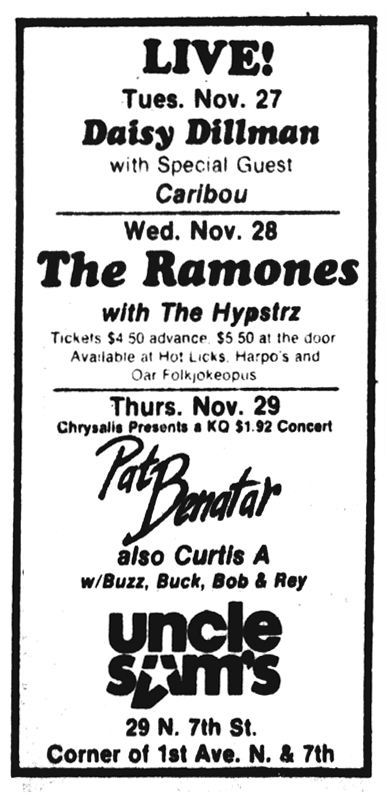
November 27, 1979: Daisy Dillman with Caribou
November 26, 1979
Curing the Winter Blahs
KMOJ and KFAI held a benefit to “cure the winter blahs” and raise money for the two non-profit radio stations.
Performers were Willie and the Bees, Vicky Mountain, and the John Einweck Band.
November 28, 1979
The Day Disco Died
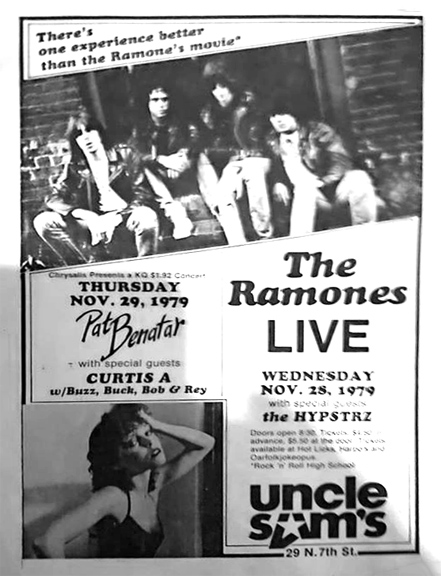
November 28, 1979 was the first of three times the Ramones came to the venue before it became First Avenue, although it was not the band’s first appearance in Minneapolis. Jon Bream found the first 30 minutes fun, but after that the show got boring. (Review December 4, 1979). The Hypsterz opened the show.
Although it wasn’t a planned or cut-and-dried transformation, Chris Riemenschneider pinpointed this night as the one that began the end of Disco’s hold on Uncle Sam’s (Star Tribune, October 28, 2017):
[A] pivotal turning point came Nov. 28, 1979, when four black-leathered punk rockers from Queens broke through the flashy red-white-and-blue Uncle Sam’s sheen and destroyed the disco era at the club.
. . .
Longtime house DJ Kevin Cole also considers the Ramones gig the big-bang moment for the club’s post-disco existence. “It meant a lot,” recalled Cole, one of the hip record-store clerks helping McClellan steer the club into its new incarnation. “To have them in our venue was remarkable, and it sold out! We were onto something.”
November 29, 1979
Pat Benatar
November 29, 1979: Pat Benatar, opened by Curtiss A
November 30, 1979
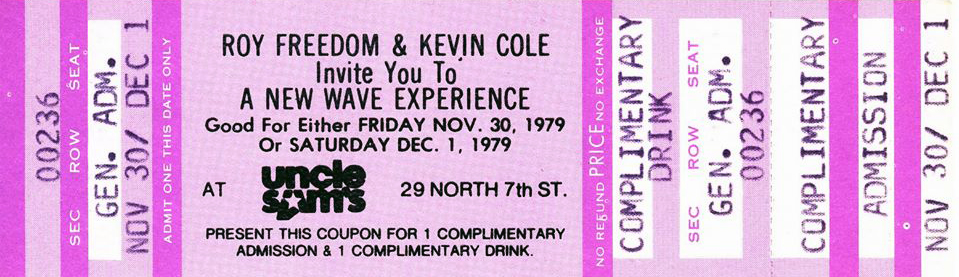
A New Wave Experience
Disc jockeys Roy Freedom and Kevin Cole Were encouraging the transition to what was then being called “New Wave” music, as evidenced by these special shows they hosted on November 30 and December 1, 1979.
December 5, 1979
Ladies Nights
December 1979: Tuesdays Were Ladies Nights, With Fashion Shows and Male Dancers.
December 5, 1979: Whiskey River with the North Country Band
December 26, 1979: Whiskey River with Daisy Dillman
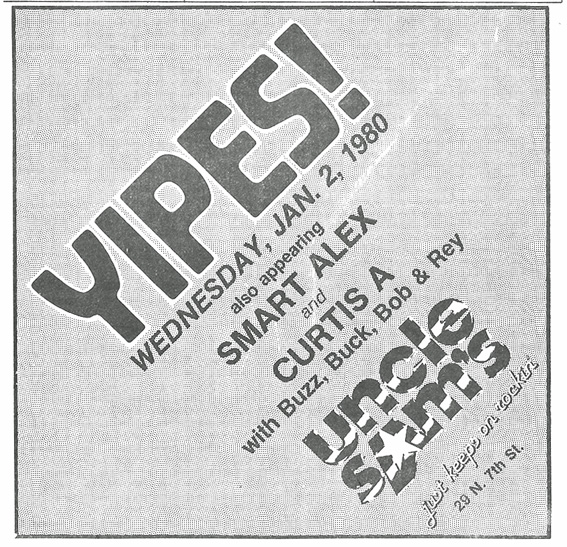
January 9, 1980
Bad Boy, With Soda


January 16, 1980
Sussman Lawrence, With the Tropics

January 21, 1980: Overtones, New Psychenauts, Hypsterz
January 23, 1980: Dare Force, with Jiggs Lee and Fragile, Dame

January 29, 1980
Tuesday All Male Revue
Perhaps as a Retaliation for the Wet T-shirt Contests and Other Mysoginist Goings on at the Club, Someone Though to Bring in an All-male Revue on Tuesdays to Give the Ladies Some Fun. Imagine the Situation at 9:30 When the Guys Were Let in and the Women Were All Loosened Up on 50 Cent Drinks. Uh Oh.

January 30, 1980: Johnny Holm, with Gadband and Home Free
February 6, 1980: Tommy James Postponed to May 29, 1980
Mid-March, 1980: Mud Wrestling came to Uncle Sam’s
March 19, 1980
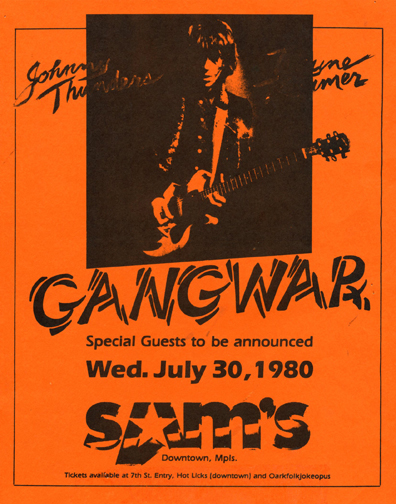
Gang War
Gang War Included Johnny Thunders of the New York Dolls and Wayne Kramer of the Mc5. Gang War Would Return in October.
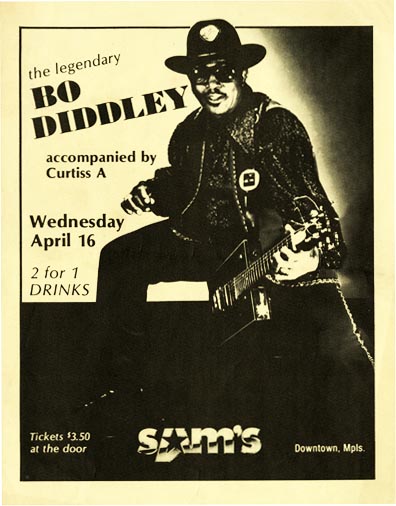
April 16, 1980
Bo Diddley, accompanied by Curtiss A
April 16 and 18, 1980
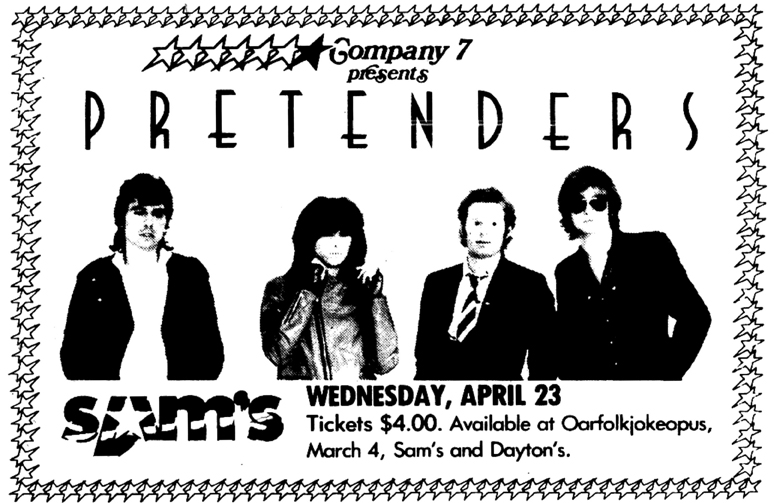
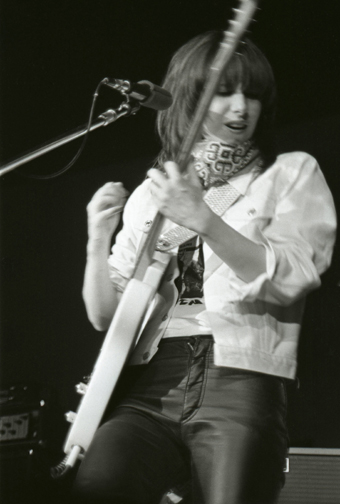
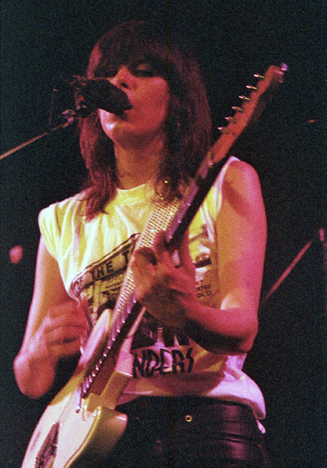
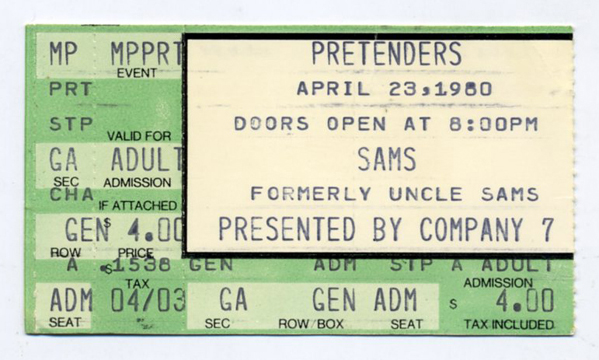
April 23, 1980
Pretenders, with Curtiss A
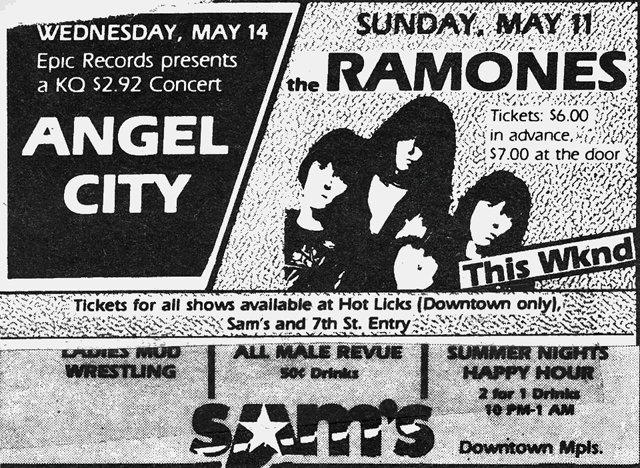
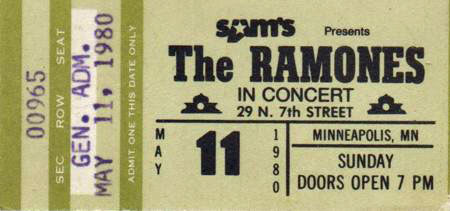
May 11, 1980
The Ramones, Wilma and the Wilburs, and the Overtones
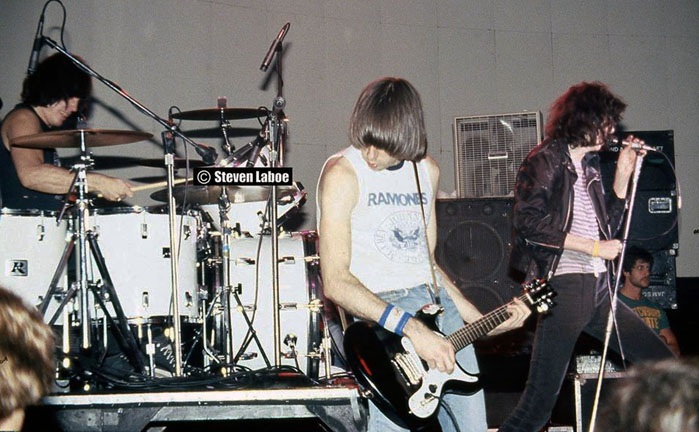
May 13, 1980
Disco Was Dying, and Clubs Were Trying New Things
(Minneapolis Star): Disco Was Dying, and Clubs Were Trying New Things.
Sam’s Schedule of Events:
- Mondays: Women mud wrestling
- Tuesdays: Male dancers
- Wednesdays: Rock ‘n’ Roll Revival
- Weekends: Two-for-one drinks/Disco
May 14, 1980: Angel City
May 25, 1980: The Romantics
May 28, 1980: Shakers
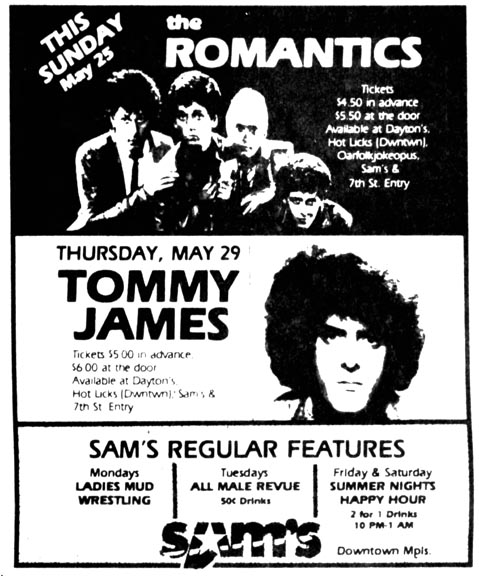
July 30, 1980
The Second Coming of Gang War, with Johnny Thunders and Wayne Kramer
January 22, 1981
Nona Hendryx and her band Zero Cool, opened by Things That Fall Down
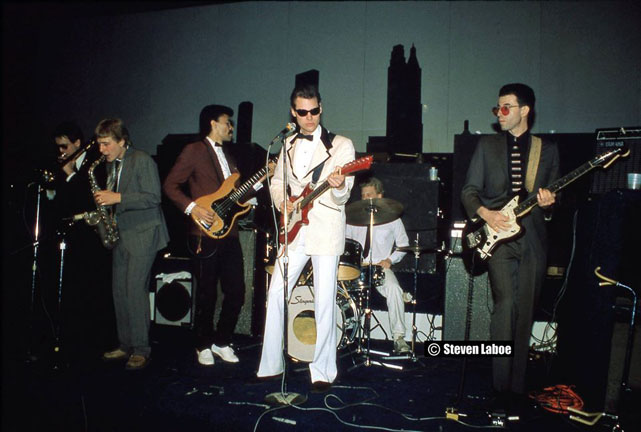
Don Engebretson on trombone; Roger ? on sax; Garrison White; Scott Brooks; Paul ? on drums; David Foley on bass.